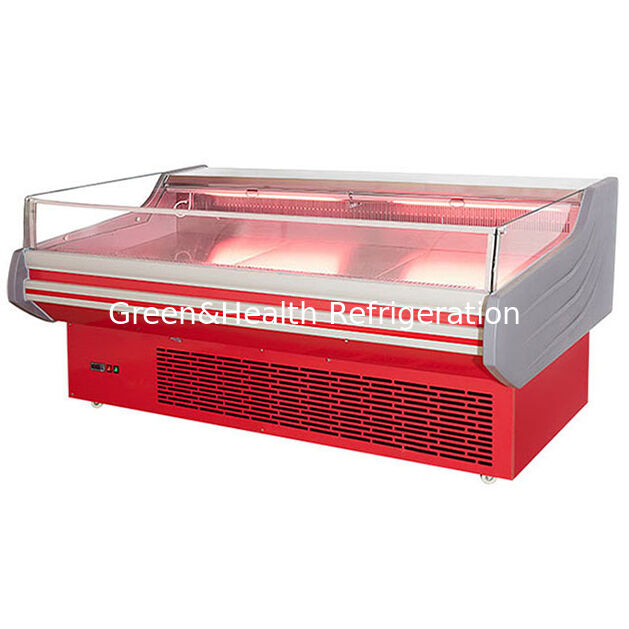
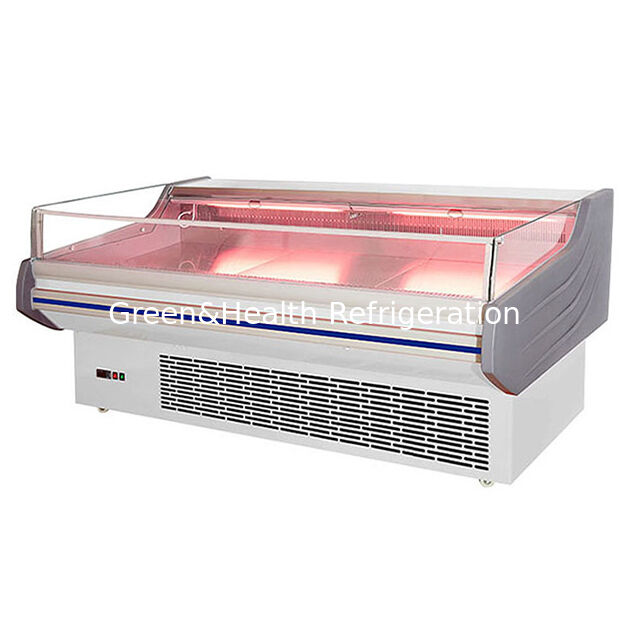
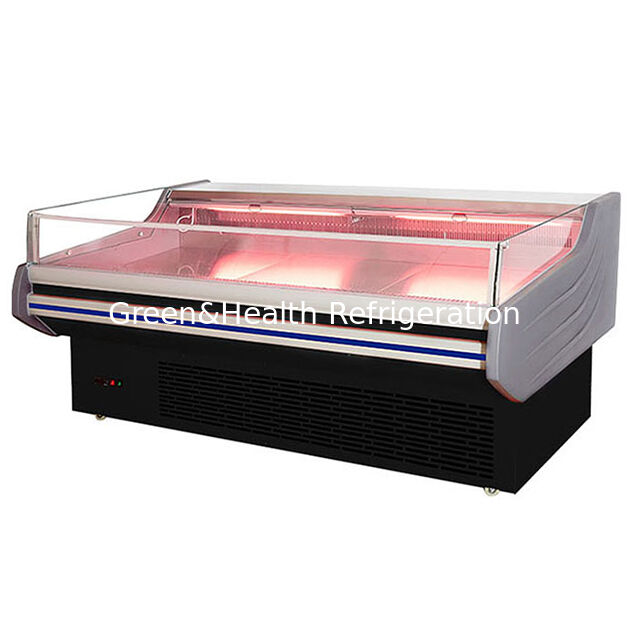
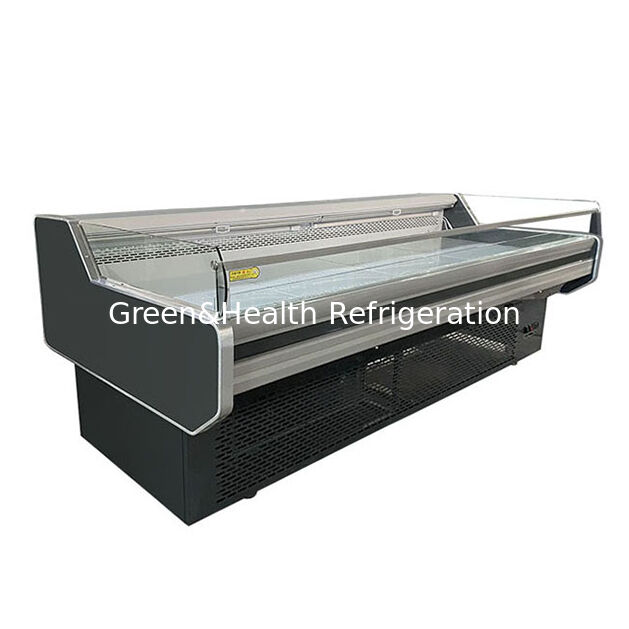
1Les réfrigérateurs d'affichage commercial de viande fraîche maintiennent un contrôle précis de la température, généralement entre 0 et 4 degrés Celsius, assurant la sécurité du produit, ralentissant la croissance bactérienne,et préservant la texture, la couleur et la valeur nutritive.
2La conception avancée du flux d'air assure un refroidissement uniforme sur l'ensemble de l'armoire, évitant les points chauds ou les zones de gel,et de veiller à ce que tous les produits à base de viande exposés bénéficient de conditions de stockage uniformes.
3Les portes en verre à haute transparence ou les conceptions avant ouvertes améliorent la visibilité du produit, permettant aux clients d'inspecter clairement la fraîcheur et la qualité,qui soutient l'achat impulsif et améliore l'efficacité globale du merchandising.
4Les systèmes de réfrigération robustes sont conçus pour fonctionner en continu dans des environnements de vente au détail à fort trafic.offrant des performances fiables dans des conditions d'ouverture fréquente des portes et de température ambiante variable.
5Les composants écoénergétiques, tels que les compresseurs optimisés, l'éclairage LED et les systèmes intelligents de dégel, réduisent la consommation d'énergie tout en maintenant des performances stables.le soutien de coûts d'exploitation et d'objectifs de durabilité moins élevés.
6Les étagères réglables et la disposition modulaire de l'intérieur permettent d'accueillir différentes coupes de viande, tailles d'emballage et styles d'affichage,fournir aux détaillants la flexibilité nécessaire pour adapter l'armoire à l'évolution des assortiments de produits.
7Les intérieurs en acier inoxydable et les matériaux de qualité alimentaire améliorent l'hygiène, résistent à la corrosion et simplifient le nettoyage.aider les exploitants à respecter les règles strictes en matière de sécurité alimentaire et à maintenir une présentation professionnelle.
8Le contrôle intégré de l'humidité aide à prévenir la déshydratation excessive ou la condensation de surface sur les produits à base de viande, préservant le poids, l'apparence et la durée de conservation pendant les périodes d'affichage prolongées.
9Le fonctionnement à faible bruit et le contrôle des vibrations contribuent à un environnement de magasinage confortable, minimisant les perturbations pour les clients et le personnel tout en maintenant une performance de réfrigération stable.
10Les vitrines de viande fraîche modernes prennent souvent en charge des fonctionnalités de surveillance intelligentes, notamment des écrans de température numériques et des systèmes d'alarme, ce qui permet une maintenance rapide, un risque réduit de détérioration, une meilleure qualité de la viande et une meilleure qualité de la nourriture.et une meilleure gestion opérationnelle.


 Votre message doit contenir entre 20 et 3 000 caractères!
 english
 français
 Deutsch
 Italiano
 Русский
 Español
 português
 Nederlandse
 ελληνικά
 日本語
日本語
 한국
한국
 中文
中文
 العربية
 हिन्दी
 Türkçe
 indonesia
 tiếng Việt
 ไทย
ไทย
 বাংলা
বাংলা
 فارسی
فارسی
 polski